
Fruit Values · List
Grow a Garden Fruit Values
Last updated: November 3, 2026
Tool note (tool on top, existing tool unchanged): The fruit values reference sits at the top of this page. You look up a fruit, read its base value at its base weight, and scale it for weight and mutations. This article explains the scaling. No new tool is built here. Note for later review: the site’s own planning notes flag this page as overlapping the Value List hub in intent, so this page’s angle is kept strictly on fruit-level sell values, not on trade verdicts.
Scale a fruit's base value for weight and mutations. GAG1: base × weight² × variant × additive bracket × (1 + friend boost). GAG2 (gag.gg model): base × size^2.5 × mutation × freshness × friend boost. The two games' formulas differ — do not mix them.
Check against the page's worked example (GAG1, base 1,000, no mutations, no boost): 1 kg → 1,000 · 2 kg → 4,000 · 3 kg → 9,000 Sheckles. GAG1 environmental bracket is additive: 1 + (m1 − 1) + (m2 − 1). In GAG2 a single mutation applies per crop on the majority model.
Fruit Value Meaning and Limits
A fruit value on this page means NPC sell value: what the game pays when you sell the fruit. It does not mean trade value. Trade value adds pet tokens, demand, liquidity, and trust on top of sell value, and it lives on a different page with a different model. A fruit’s sell value is a floor for its trade value, not the trade value itself. When someone quotes a fruit’s sell value as its trade price, they are quoting the floor as if it were the building.
Baselines Before Any Number
Base Value at Base Weight
Base value is the price at base weight. A Carrot is listed at 18 on growagarden-calc’s crop table. In GAG2, the gag.gg table lists Carrot at 5 at 0.8 kg, Mango at 90 at 3 kg, Cherry at 350 at 1.5 kg, and Sunflower at 1,750 at 6 kg. Those GAG2 figures belong to GAG2 only. A GAG1 Carrot and a GAG2 Carrot are different items in different games with different numbers, and this page never lets one game’s table price the other game’s fruit.
Every Value Needs Its Weight
Weight must be stated with every fruit value because weight does most of the work. In GAG1, weight enters squared: doubling weight quadruples the weight factor before mutations. In GAG2, weight enters at roughly the 2.5 power on gag.gg’s model. A fruit value without a weight is therefore not a value at all. It is a number waiting for the one input that decides it. One GAG1 model even notes that a fruit lighter than base weight still sells for base value — flagged here because other models differ, and the difference matters for light fruits.
Fruit Value List by Tier
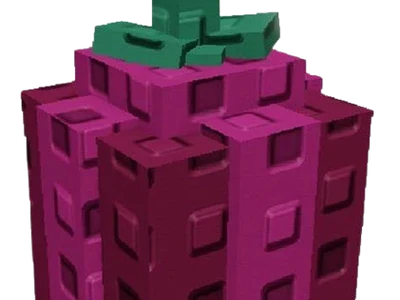
Common and Uncommon Fruits
Common and uncommon fruits are the working class of the game: cheap, fast, and everywhere. Their individual values are small, but their hourly value can be large because they turn over quickly. Judge them by Sheckles per hour on your plots, not by single-fruit price. A common fruit that cycles four times an hour can out-earn a rare fruit that cycles once.
Rare and Legendary Fruits
Rare and legendary fruits carry higher base values and slower cycles. Their value is more sensitive to weight and mutations, because both multipliers act on a larger base. A heavy, mutated legendary fruit is where the game’s biggest honest numbers come from. A light, unmutated one is where the biggest disappointments come from, because players compare it with the heavy, mutated version they saw in a video.
Mythical and Divine Fruits
Mythical and divine fruits sit at the top of the base-value scale, and they are where base-value errors hurt most. A wrong base value on a divine fruit, multiplied by weight squared and a mutation bracket, produces an error thousands of times larger than the same error on a common fruit. Re-check divine base values after every patch, and date-stamp them. A divine value from before a patch is a guess with a pedigree.
Weight Changes a Listed Value

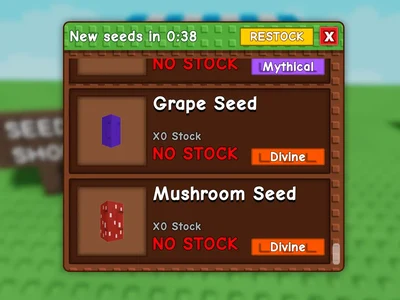
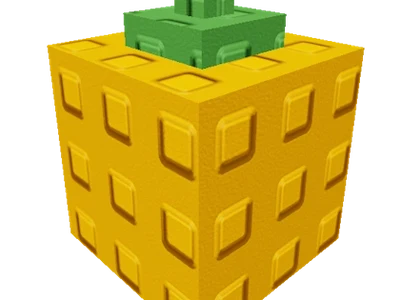
Weight changes a fruit’s value through the formula, not through opinion. In GAG1: base × weight² × growth variant × environmental bracket × (1 + friend boost). In GAG2 on gag.gg’s model: base × size^2.5 × mutation × freshness × friend boost. The page states which formula its own table uses. If you use the other game’s formula, you will get a different answer, and the difference is your error, not the game’s.
Worked Example: Base, Double, Triple
Take a GAG1 fruit with a base value of 1,000 at a base weight of 1 kg, no mutations, no friend boost. At base weight, it sells for 1,000 × 1² = 1,000 Sheckles. At double weight (2 kg), it sells for 1,000 × 2² = 4,000 Sheckles. At triple weight (3 kg), it sells for 1,000 × 3² = 9,000 Sheckles. Weight alone, with nothing else changed, multiplies the price ninefold across that range. That is why weight must be stated with every fruit value, and why a heavy common fruit can outprice a light rare one.
Mutations Change a Listed Value
Variants Versus Environmental Mutations
Growth variants and environmental mutations occupy different slots in the formula, and confusing them is the most expensive fruit-value mistake. Growth variants — Silver 5×, Gold 20×, Rainbow 50× in GAG1 majority figures — are exclusive: a fruit has one growth variant, and it multiplies once, outside the bracket. Environmental mutations sit inside the bracket: 1 + (sum of environmental multipliers − count of environmental mutations) in GAG1. In GAG2, a single mutation applies per crop on the majority model. The page lists the multiplier table it uses and flags the multiplicative disagreement openly: sources that multiply environmental mutations together produce totals far above the additive bracket, and those totals should not be quoted as GAG1 values.
Fruit Values Versus Pet Values
Fruit values are NPC sell anchors in Sheckles. Pet values are trade tokens in the Trade World. The lists answer different questions — “what is this fruit worth when sold?” versus “what is this pet worth in a trade?” — and they use different currencies, different baselines, and different models. A fruit’s sell value can inform a trade discussion as a floor, but it can never substitute for a pet’s token value. Keep the lists, the currencies, and the questions apart.
Mistakes With Fruit Values
Comparing Fruits at Different Weights
Comparing fruits at different weights compares weight, not fruit. A heavy fruit will beat a light fruit of a better species, and the comparison will teach you nothing about either species. Normalise to the same weight first, or compare base values at base weights. Anything else is a weight contest dressed as a fruit contest.
Fruit Value Is Not Token Price
A fruit’s Sheckle sell value is not a token price. Trade tokens live in a different system with different supply, demand, and history. Quoting a Sheckle value as tokens misprices the trade by whatever the unspoken conversion rate happens to be in the quoter’s head — which is to say, by an unknown amount.
GAG1 Values Do Not Fit GAG2
GAG1 and GAG2 fruits share names and nothing else that matters for pricing: different base values, different base weights, different exponents (² versus about 2.5), different mutation rules, and different freshness mechanics. A GAG1 value applied to a GAG2 fruit is wrong in every input at once. Check the game first, then the table.
Frequently Asked Questions
Base × weight² × growth variant × environmental bracket × (1 + friend boost) in GAG1; base × size^2.5 × mutation × freshness × friend boost on gag.gg’s GAG2 model. The page states which formula its own table uses.
Because weight is squared (GAG1) or raised to ~2.5 (GAG2): doubling weight quadruples the weight factor in GAG1 before mutations. A heavy common fruit can outprice a light rare one.
Growth variant multiplies once (Silver 5× / Gold 20× / Rainbow 50×, exclusive); environmental mutations sit in the bracket 1 + (sum − count) in GAG1, or a single mutation applies in GAG2. The page lists the multiplier table it uses and flags the multiplicative disagreement.
Growth variant multiplies once (Silver 5× / Gold 20× / Rainbow 50×, exclusive); environmental mutations sit in the bracket 1 + (sum − count) in GAG1, or a single mutation applies in GAG2. The page lists the multiplier table it uses and flags the multiplicative disagreement.
A fruit-level reference: base value and base weight per fruit, plus how weight and mutations scale that fruit’s sell value. It answers “what is this fruit worth”, while the Value List hub answers “what is this trade worth” — different angle, no duplicated FAQ set.
Different base value/weight dataset, different exponent (² vs 2.5 vs 2.65), different mutation table, or a stale patch. Compare the dataset date and formula each page prints.
Conclusion: Weight, Mutation, Edition First
Check the weight, the mutation, and the edition — then compare. Two fruits with the same name can carry different weights, mutations, and game editions, and any one of those differences changes the price.