
Sheckles · Tool
Grow a Garden Sheckles Calculator
Last updated: November 3, 2026
Tool note (tool on top, existing tool unchanged): The Sheckles calculator sits at the top of this page. You enter harvest values, plot counts, and grow times, and read totals and hourly rates. This article explains the maths behind those readings. No new tool is built here. Note for later review: the site’s own planning notes flag this page as thin if left standalone, so it is written as a full method article — formula, table, worked example, and limits — not as a stub.
Price each fruit once — base × weight² × variant × additive bracket × (1 + friend boost) × quantity — then add them into a running total. Environmental mutations add inside the bracket: bracket = 1 + (m1 − 1) + (m2 − 1). Use 1 for no mutation.
Per-hour rate = (value per harvest × plot count) ÷ grow time in hours. It assumes continuous turnover at the entered interval — it does not model travel time, replant delay, weather windows, mutation odds, pet auras, or seed costs. Leave a fruit row empty to skip it. Skip a fruit by leaving its base value blank.
Sheckles Mean Sell Value Only
Sell Value, Not Trade Tokens
Sheckles are sell value: what a crop is worth when sold in the game. They are not trade tokens, which are the separate currency of the Trade World, and they are not a real-world currency. Every number on this page lives in Sheckles. When a trade discussion switches to tokens, the Sheckle maths stops applying, and a different page’s model takes over. Keep the currency labelled, or every total that follows is suspect.
Sheckle Calculation, Step by Step

Step 1: Price Each Fruit
Price each fruit once, at its own weight and mutations, using the crop formula: base value × weight² × growth variant × environmental bracket × (1 + friend boost) in GAG1. Weight enters squared, so a fruit at double weight is worth roughly four times its base before mutations. Mutations enter through the additive environmental bracket, with growth variants multiplying outside it. Price the fruit you actually hold, not the fruit at average weight, or your total describes someone else’s harvest.
Step 2: Variant, Friends, Quantity
After the per-fruit price, apply the growth variant (Silver 5×, Gold 20×, Rainbow 50× in GAG1 majority figures), the friend boost, and the quantity of identical fruits. Quantity is multiplication, not addition of guesses: ten identical fruits are ten times one fruit’s price, not ten separate estimates. Keep variant, boost, and quantity as separate steps so an error in one does not hide inside the others.
Step 3: Add Fruits Together
Add the priced fruits into a running total, one fruit at a time, without double-counting any mutation. A stacked mutation belongs in the bracket once. A growth variant belongs outside the bracket once. A friend boost belongs once per harvest. The running total is only as honest as the discipline of counting each factor exactly once.
| Step | What happens | Common error |
|---|---|---|
| 1. Price each fruit | Base × weight² × variant × bracket × boost | Pricing at average weight instead of actual weight |
| 2. Variant, boost, quantity | Multiply once each | Applying the same mutation twice |
| 3. Running total | Add fruits one by one | Mixing Sheckles with trade tokens |
Worked Example: Three Fruits, One Total

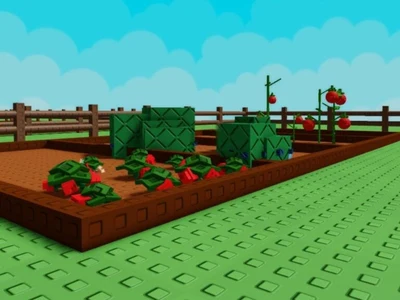


Take three fruits from one harvest, all GAG1, no friend boost, to keep the maths visible. Fruit one is a base-value 1,000 crop at 2 kg with no mutations: 1,000 × 2² = 4,000 Sheckles. Fruit two is a base-value 5,000 crop at 3 kg with Wet (2×) inside the bracket: 5,000 × 3² × (1 + 2 − 1) = 5,000 × 9 × 2 = 90,000 Sheckles. Fruit three is a base-value 20,000 crop at 2 kg with Gold (20×) outside the bracket and Shocked (100×) inside it: 20,000 × 2² × 20 × (1 + 100 − 1) = 20,000 × 4 × 20 × 100 = 160,000,000 Sheckles. The running total is 4,000 + 90,000 + 160,000,000 = 160,094,000 Sheckles. The example also shows why mutations dominate Sheckle totals: the third fruit carries the harvest, and any error in its mutation maths swamps the other two fruits entirely.
Sheckles per Hour, Explained Honestly
Sheckles per hour equals (value per harvest × plot count) ÷ grow time in hours. Coins per plot per hour is the same harvest value divided by grow time alone. Grow time is entered in minutes and converted internally. The formula is simple, and its simplicity is its trap: it assumes continuous turnover at the entered interval. It does not model travel time, replant delay, weather windows, mutation odds, pet auras, or seed costs. A figure built on a cycle you cannot actually re-harvest is optimistic by construction.
Grow Time, Frequency, Mutation Windows
Grow time and harvest frequency set the hourly rate’s ceiling. A crop that grows in 10 minutes and is replanted instantly earns its hourly rate. A crop that grows in 10 minutes but sits unharvested for an hour earns a tenth of it. Mutation windows complicate this further: a crop left unharvested through a storm gains mutations, but loses hourly turnover. The honest hourly figure uses the cycle you can actually sustain, including delays, not the cycle the crop’s timer promises.
Fast Crops Can Beat Valuable Crops
A fast crop can beat a high-value crop per hour because time divides everything. Halving grow minutes roughly doubles coins per hour if harvest value stays fixed. Early-game speed therefore favours fast cycles such as Carrots and Strawberries, mutation farming favours reliable mutators such as Bamboo and Cactus, and event windows favour high-base Divine crops with stacked mutations. Compare three scenarios on the same plots — no mutations, expected mutations, observed sell price — before trusting any single hourly figure.
Sheckle Levers in Impact Order
Weight, Mutations, Multi-Harvest Crops
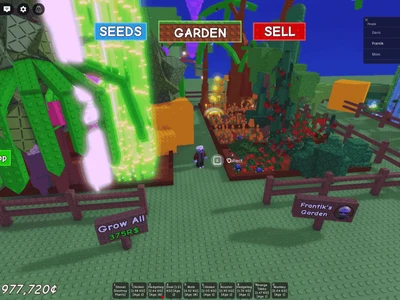
In order of impact for most gardens: weight first, because it enters squared; mutations second, because the bracket multiplies everything; multi-harvest crops third, because they repeat the harvest without replanting. A player who chases rare mutations on light crops while ignoring weight is pushing the smallest lever hardest. Grow heavy first, mutate second, and let multi-harvest repeat the result.
Weather Timing Versus More Plots
Weather timing and plot count compete for the same attention. Timing a harvest around a storm raises value per fruit. Planting more plots raises value per hour. The better lever depends on your constraint: if plots are capped, time the weather; if time is capped, plant more plots. Most gardens are capped on both at different hours of the day, so the honest answer changes with the session.
Mistakes With Sheckle Totals
Counting a Stacked Mutation Twice
A stacked mutation counted twice is the single most common Sheckle error, and it inflates totals by whole orders of magnitude. Count each mutation once inside the bracket, each variant once outside it, and the friend boost once per harvest. If a total looks too good, recount the bracket before you celebrate it.
Mixing Sheckles With Trade Tokens
Sheckles and trade tokens are different currencies with no fixed conversion. A total that adds token values to Sheckle values is not a total. It is a category error with a number attached. Label every input’s currency before you add anything.
Stale Base Values After Patches
Base values change after patches, and a total built on a stale base describes a game that no longer exists. Re-check base values after any patch that touches crops, mutations, or pricing, and date-stamp your totals so a reader can tell how fresh they are.
Frequently Asked Questions
It estimates Sheckles per hour (farm-wide and per plot) from crop harvest value, plot count and grow time — GAG farming math, not a real-world farm profit calculator. Use it to compare rotations before planting.
Rotation-dependent, not a fixed list: early-game speed favours fast cycles (Carrots, Strawberries); mutation farming favours reliable mutators (Bamboo, Cactus); event windows favour high-base Divine crops with stacked mutations. Compare three scenarios on the same plots — no mutations, expected mutations, observed sell price — before trusting one hourly figure.
No: it is gross harvest value per hour, not profit — seed costs, gear costs and failed/weather-missed cycles are outside the sheet on the profit page’s own account. Do not present the hourly figure as net profit.
Rotation-dependent, not a fixed list: early-game speed favours fast cycles (Carrots, Strawberries); mutation farming favours reliable mutators (Bamboo, Cactus); event windows favour high-base Divine crops with stacked mutations. Compare three scenarios on the same plots — no mutations, expected mutations, observed sell price — before trusting one hourly figure.
It estimates Sheckles per hour (farm-wide and per plot) from crop harvest value, plot count and grow time — GAG farming math, not a real-world farm profit calculator. Use it to compare rotations before planting.
No: it is gross harvest value per hour, not profit — seed costs, gear costs and failed/weather-missed cycles are outside the sheet on the profit page’s own account. Do not present the hourly figure as net profit.
Conclusion: Price Each Fruit Once
Price each fruit once, then add — never guess the total. A harvest total is only as good as each fruit’s weight, mutation, and growth variant entered, so check the inputs fruit by fruit before you trust the sum.