
Grow a Garden 2 · Tool
Grow a Garden 2 Value Calculator
Last updated: November 3, 2026
[xyz-ips snippet="Grow-A-Garden-Value-Calculator"]
This page exists for one reason: GAG2 crops priced with GAG1 maths are wrong, and they are wrong by enough to ruin trades. A GAG2 fruit is not a GAG1 fruit with a new name. It has a different exponent, a different mutation rule, a different freshness system, and in Fall Harvest a different currency. This page prices it with GAG2 rules, and it states every contested choice it makes.
Why GAG2 Needs Separate Maths
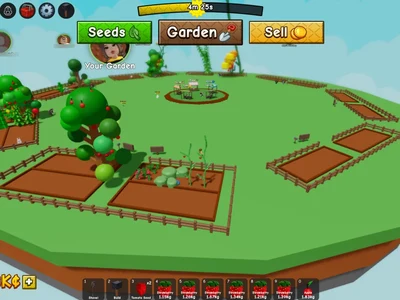
GAG1 maths squares weight, stacks environmental mutations in a bracket, and multiplies one growth variant outside it. GAG2 maths raises size to an exponent near 2.65, applies one mutation only, adjusts for freshness and decay, and adds friend boost. No single tool can serve both without silently choosing one game’s rules for the other game’s crops, and a silent choice is how players lose value without knowing why.
GAG2 Sell Formula, Step by Step



Base value × (weight ÷ base weight) raised to the size exponent × one mutation multiplier × freshness factor × friend boost, with a price floor below which nothing sells. Work it in that order. Each step is checked below, and each contested step is flagged where it appears.
Base Sell at Base Weight
Base value is the crop’s value at its base weight, before size, mutation, freshness, or friend boost. GAG2 base values differ from GAG1 base values for shared names: GAG2 Mango is reported at 90 at 3 kg, Cherry at 350 at 1.5 kg, and Sunflower at 1,750 at 6 kg on one GAG2 table, against much larger GAG1 figures elsewhere. Same name, different game, different table. Never carry a base value across games.
Weight to About 2.65, Not Squared
Conflict, stated openly: the size exponent is reported as 2.5 on one model, about 2.65 on another, and 2 on a third. This page’s tool states its own exponent, and the worked examples below use 2.5 so they can be checked against the gag.gg model. At exponent 2.5, a crop at twice its base weight carries a size factor of 2^2.5 = 5.66, not 4 as squaring would give. At exponent 2.65 the factor is higher still. The exponent is the largest single source of disagreement between GAG2 tools, and any GAG2 figure quoted without its exponent cannot be reproduced.
One Mutation Only, Replacing Previous
A GAG2 fruit carries one mutation multiplier, chosen from the mutation table. There is no bracket, no growth slot plus environmental slot, and no stack to add up. What replaces stacking is choice: the single best mutation available for that fruit, in that world, at that time. A GAG2 fruit priced with two mutations is not optimistically priced. It is priced for a fruit the game does not produce.
Price Floor Caps the Downside
The price floor is the lowest value a result can take. Tiny harvests, heavily decayed produce, and low-base crops sit on the floor rather than below it. A floor is a model rule, and different models set it differently, but every honest GAG2 tool has one, because without it the formula would price small or rotten produce at nonsense fractions.
Single-Harvest Keep Rule, Contested
15% Keep Versus 25% Keep
Conflict, stated openly: single-harvest crops keep 15% of the mutation bonus above 1x on one model, and 25% on another. The formulas are keep = 1 + (mult − 1) × 0.15 and keep = 1 + (mult − 1) × 0.25. Sources differ because they fit different datasets and different game versions, and neither figure is settled by assertion. This page’s tool states which keep rule it applies, and every single-harvest figure on this page can be recomputed under the other rule to see the gap.
Worked Example: 60x on Single-Harvest
Take a single-harvest crop with a 60x mutation. At 15% keep, the keep factor is 1 + 59 × 0.15 = 9.85. At 25% keep, it is 1 + 59 × 0.25 = 15.75. The same fruit, the same mutation, two answers separated by more than half the smaller one. A player who quotes a single-harvest price without its keep rule is quoting half an answer, and the missing half is the part that decides the trade.
Multi-Harvest Keeps the Full Multiplier
Multi-harvest crops keep the full mutation multiplier on all models checked. A 60x mutation on a multi-harvest crop is 60x, not 9.85x and not 15.75x. Harvest type is therefore the first thing to check on any GAG2 fruit, before its weight, before its mutation, and before its world tag. Getting harvest type wrong corrupts every number that follows it.
Decay and Watering Explained
Decay Lowers Value, Watering Restores
Decay lowers sell value as produce sits unsold. On one model decay is a slider from fresh to fully decayed. On another it is a freshness state, with a heavily decayed result reported at −80% if unsold on one GAG2 weather source. Watering restores fresh on the models checked: 1–3 Watering Cans to fully heal decay on one model. Check freshness before pricing, because a decayed fruit priced as fresh is overvalued by the full decay amount, and that amount can exceed the entire mutation bonus.
New Mutation Resets Decay Value
On one GAG2 model, a new mutation resets sell-value decay to fresh even when the crop still looks decayed. That rule matters for timing: a fruit that gains a mutation late recovers value it had already lost to decay, at least for selling purposes. The rule is model-specific, flagged as such, and it must not be assumed on models that do not state it.
Friends, Quantity, and Daily Deal
Friends: +10% Each, Contested Cap
Friends add a percentage boost each on GAG2 models, with the cap contested: +10% each up to 7 friends on one source, up to 70% on a slider on another. GAG1 caps differ again and must not be imported. State the friend count and the cap with every boosted figure, because a boosted figure without its friend count cannot be unboosted for comparison.
Daily Deal: 2.2x, One Fruit
Daily Deal buys one fruit at 2.2x its usual sell value on a cooldown, on one model’s figures. It is a single-fruit deal, not a harvest multiplier, and it multiplies the fruit’s sell value after size, mutation, freshness, and friend boost have already been applied. Applying 2.2x to a whole harvest, or adding it into the mutation slot, overstates the deal by the size of the harvest.
GAG2 Value Table by Weight
Use GAG2 Mango as the worked crop, with base value 90 at base weight 3 kg, on the 2.5 exponent model, before freshness and friend boost.