
Egg Hatch · Tool
Grow a Garden Egg Hatch Calculator
Last updated: November 3, 2026
Final hatch time = base minutes × (1 − helper sum, capped at 90%). Pick an egg from this page’s base table, tick helpers from one table, and read the clock. The shortest possible hatch is 10% of base time, however many helpers are stacked.
Base times are contested: other tables give Common 5 min, Uncommon 15 min, Bug 20 min or 8h, Mythical varies — this page lists its own table with the conflict flagged and does not present any set as settled. Helper tables must not be mixed: a helper rate from one table added to another double-counts the same pet. Incubators and fuel are a separate layer — do not enter them as helper percentages; lower base minutes manually if modelling an item reduction. Roster limit: 8 pets.
An egg’s hatch time looks fixed until helpers enter the picture, and then it looks arbitrary until the cap is understood. This page gives both: the base time for the egg, the helper stack that shortens it, and the cap that stops the shortening. With those three, any hatch time can be checked by hand.
Hatch Time: Egg, Helpers, Cap
Three factors set hatch time: the egg’s base time, the helper boosts added to it, and the 90% reduction cap on the additive model used here. Base time is the longest input and the most contested, because sources disagree on several eggs. Helpers are the controllable input, because the player chooses the roster. The cap is the limit that stops the controllable input from running away: past 90% reduction, extra helpers waste roster slots.
Base Hatch Times by Egg
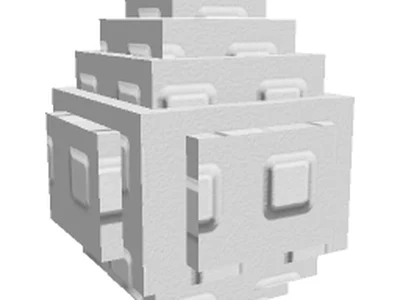



Common, Uncommon, Rare Eggs
Base times for common eggs are the least contested figures on this page, and even they differ by source. The table below states this page’s table first, with the conflict note attached, rather than presenting one source’s table as settled for every egg.
Mythical, Bug, Event Eggs Compared
Conflict, stated openly: base-time tables disagree sharply across sources. One source gives Common 10 min, Uncommon 30 min, Bug 4h, Premium, Bee, and Anti-Bee 6h, and Zen 8h. Another gives Basic 5 min, Uncommon 15 min, Bug 20 min, Mythical 180 min, and Divine 240 min. A third gives Common 10 min to Bug 8h. These tables cannot all be right for the same eggs, and they may describe different egg sets, different game versions, or different measurement methods. This page lists its own table with the conflict note, and a hatch time quoted without its table cannot be compared with another hatch time.
| Egg (this page’s table, with conflict flagged) | Base time stated here | Conflicting figure elsewhere, flagged |
|---|---|---|
| Common / Basic | 10 min | 5 min on another table |
| Uncommon | 30 min | 15 min on another table |
| Bug | 4h | 20 min on one table, 8h on another |
| Mythical | 180 min (3h) | Varies by table; see conflict note |
| Zen | 8h | The longest common egg time on the tables checked |
Hatch Formula With Cap Stated
Final hatch time = base minutes × (1 − min(0.9, sum of helper boosts)), on the additive model used here. Helper boosts are decimals that add together. The sum is capped at 0.9, so the shortest possible hatch is 10% of base time, however many helpers are stacked.
Helper Boosts Add to 90% Cap
Helper boosts add as decimals until the cap, and then they stop adding. Five helpers at 15%, 12%, 12%, 10%, and 8% sum to 57%, which is under the cap, so all of it counts. Nine helpers summing to 105% would count only 90%, and the extra 15% would be wasted roster space. The cap is what makes roster choice a real decision rather than a pile-up: past the cap, a helper slot is better spent on a mutation or XP specialist.
Worked Example: 8-Hour Egg, Five Helpers
Take a Zen egg at 8 hours (480 minutes), with the five main helpers on one source’s table: Sunny Side Chicken +15%, Rooster +12%, Blood Kiwi +12%, Bald Eagle +10%, Kiwi +8%. Their sum is 57%. Final time = 480 × (1 − 0.57) = 480 × 0.43 = 206.4 minutes, about 3 hours 26 minutes. The same egg with no helpers takes the full 8 hours. The difference, about 4 hours 34 minutes, is the value of the helper roster, stated in time rather than in percentages.
Helper Pets, One by One
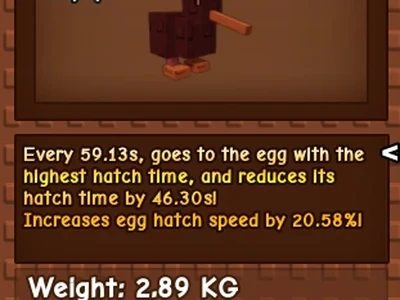
Five Main Hatch Helper Pets
On one source’s table, the five main helpers are Sunny Side Chicken +15%, Rooster +12%, Blood Kiwi +12%, Bald Eagle +10%, and Kiwi +8%, summing to 57% before the cap. On another source’s presets, the figures are Blood Kiwi +15%, Bald Eagle +10%, Rooster +8%, Chicken +5%, Parrot +5%, Owl +4%, and Penguin +3%, summing to 50%. On a third source’s ranking, Blood Kiwi leads at +20.4% speed with a periodic cut of 45.9 seconds every 59.4 seconds, and Roosters are ranked for multiplicative stacking. Three helper tables exist. This page uses one and names the others, because a helper rate from one table added to a helper rate from another double-counts or misprices the same pet.
Percentage Speed Versus Time Cuts
Percentage speed boosts apply continuously and reduce overall hatch time by a percentage. Periodic time cuts subtract fixed seconds at intervals, for example Kiwi at −25 seconds every 60 seconds on one model. Both stack on one source’s model, but the additive page here models percentages only. A periodic cut converted into a percentage without its interval, or a percentage converted into a periodic cut without its base time, produces a hatch time that belongs to neither mechanism.