Last updated: November 3, 2026
Frog Pet Guide — Growth-Advancing Legendary in Grow a Garden
The Frog advances a random plant's growth by 24 hours, which makes it a time machine for one plant at a time. If your garden has one crop you need ready sooner, the Frog is the pet that gets it there. If you need everything ready at once, it is not.
Frog Croak: Advance Growth 24 Hours
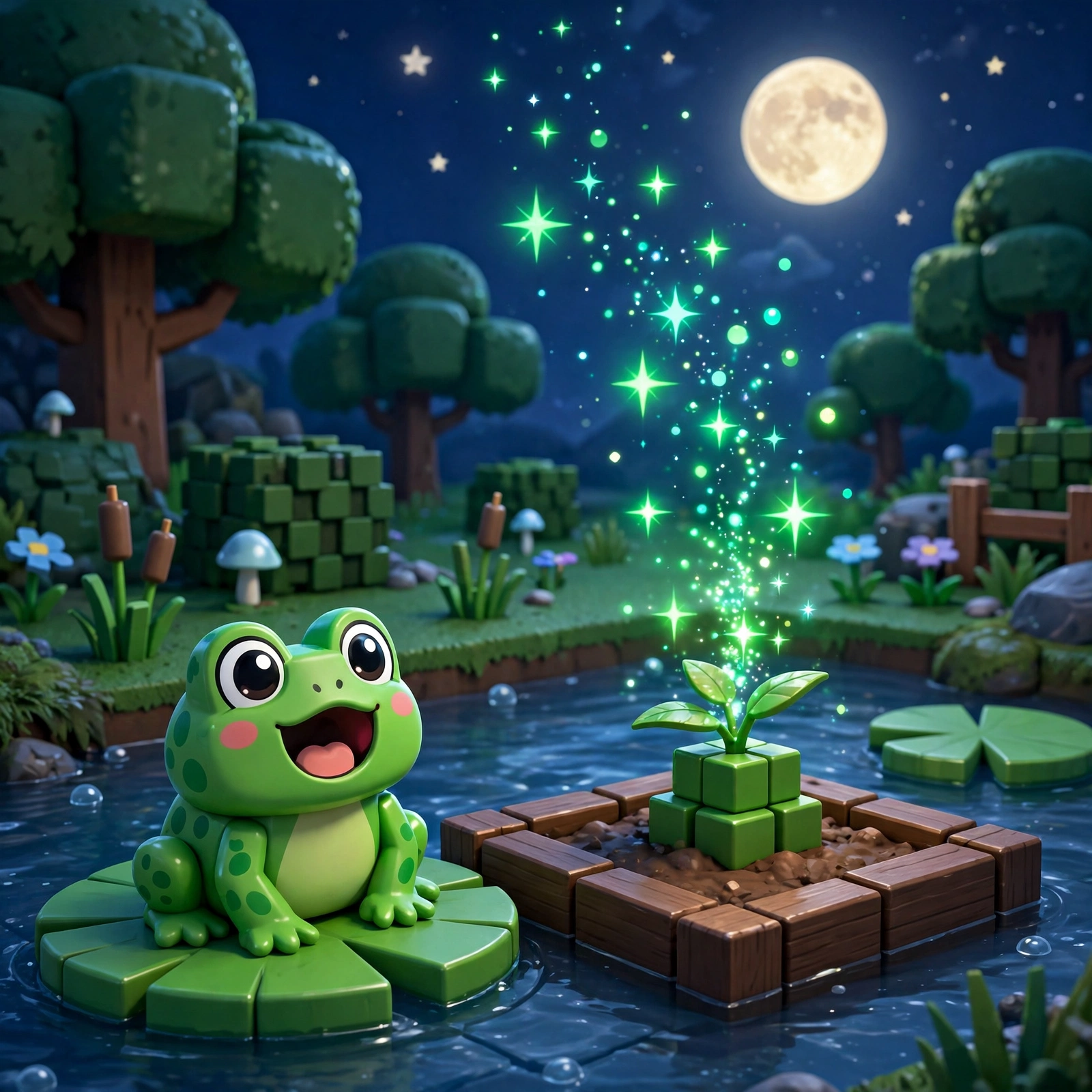
Each croak advances a random plant's growth by 24 hours. That is a full day of growth in one trigger, which can finish a slow crop or push a nearly-ready crop over the line. The catch is the word random: the Frog chooses the plant, not you. Over many croaks, the randomness evens out, but on any single croak, it may advance a plant you did not care about. The Frog rewards gardens where most plants are worth advancing, and punishes gardens with one precious plant among filler.
Cadence Conflict: 5, 10, 15, 20 Minutes
Search quotes croak cadences of 5, 10, 15, and 20 minutes, and those cannot all describe the same Frog in the same conditions. The spread may reflect different Frog ages, different measurement windows, or different Frog variants mixed together. Until a game check settles it, plan around the slowest figure. A strategy built on a 5-minute croak that actually runs at 20 minutes will miss every deadline it was built for.
Advance Growth vs Speed Boost Wording
Two wordings describe what look like different effects, and they need untangling. "Advance growth by 24 hours" means the plant jumps forward a day instantly. "Growth-speed boost" means the plant grows faster over time. Those are different mechanics with different results: a jump finishes a plant now, while a speed boost shortens every future wait. Sources use both wordings for Frog-family pets, sometimes for the same pet. Check which wording your Frog's own description uses before you plan around it.
Getting Frog: Night Egg, Lunar Glow
The Frog hatches from the Night Egg, from the Lunar Glow Event. The steps are: obtain Night Eggs through the Lunar Glow route, hatch them, and expect most hatches to be other pets. The Frog is a Legendary, not a common, so the hatch is a chase, not a certainty.

Frog Hatch Disagreement: 14% vs 16–17%
Hatch chance reports disagree: 14 percent on one side, and 16.74 and 17.63 percent on the other. The gap may reflect different egg pools, different event phases, or different counting methods. All three figures describe a plausible Legendary-range chance, so the practical advice is the same whichever is right: budget several Night Eggs per Frog, and do not promise yourself a Frog from one egg.
Frog vs Echo Frog, Tree Frog
Three frogs, three pets, and the guides mix them constantly. The Frog is the Night Egg Legendary described above. The Echo Frog is a different pet with the same effect on a faster cycle. The Tree Frog is a different pet again, from a different egg, with a different effect. Buying the wrong frog is the most common Frog mistake, and it is entirely avoidable by checking the egg.
Echo Frog: Same Effect, Faster Cycle
The Echo Frog gives the same growth-advance effect on a faster cycle, at Mythical tier. Faster cycle means more 24-hour jumps per session, which means more plants finished sooner. If you want the Frog's effect at higher volume, the Echo Frog is the upgrade. It costs more because it does more, and the price gap is the cycle gap made visible.
Tree Frog: Jungle Egg, Not Night Egg
The Tree Frog comes from the Jungle Egg and gives a growth-speed effect, not the Night Egg Frog's growth jump. It is a different mechanic from a different egg. A guide that lists the Tree Frog as a Frog variant has mixed two pets. Check the egg: Night Egg means Frog family jump, Jungle Egg means Tree Frog speed.
| Frog pet | Egg | Effect |
|---|---|---|
| Frog | Night Egg | Advances a random plant by 24 hours |
| Echo Frog | Faster-cycle variant | Same jump effect, faster cycle, Mythical tier |
| Tree Frog | Jungle Egg | Growth-speed effect, not a growth jump |
Best Placement: Near High-Value Plants
The Frog's effect is random across plants, so placement cannot aim it precisely, but garden composition can. Fill the garden with plants worth advancing, and every random croak lands somewhere useful. Leave filler plants in, and croaks get wasted on them. The best Frog garden is a garden with no filler: every plant is one you would be glad to see jump a day forward. That is the only aiming the Frog allows, and it is enough.
Frog Weight by Age
Frog weight follows the standard formula. No confirmed hatch weight was found in the sources checked.
Frog Weight Formula
Age 1 gives hatch weight, age 50 about 5.5 times, age 100 ten times. Read your own Frog's hatch weight in game and multiply.
Frog Weight Classes
Normal under 5 kg, Huge 5 to under 7 kg, Titanic 8 to under 9 kg, Godly 9 kg and up.
Unconfirmed: Frog Value, Hatch Weight
Search does not confirm the Frog's trading value or hatch weight in the sources checked. The Lunar Glow Event cycle decides availability, and no stable completed-trade price was found. Check the live event and recent completed trades before buying.
Frog Patch and Freshness Check
Croak cadence, hatch chance, and event availability change with patches. Check current patch notes before trading. The figures here are community-reported, not in-game verified.
Conclusion
The Frog jumps one random plant forward by 24 hours per croak, on a cadence the sources still disagree about. Fill your garden with plants worth jumping, check you are buying the Night Egg Frog and not the Tree Frog, and plan around the slowest cadence figure. Do that, and the randomness becomes a system.
—
Frequently Asked Questions
Each croak advances a random plant's growth by 24 hours. That is a full day of growth in one trigger, which can finish a slow crop or push a nearly-ready crop over the line.
From the Night Egg in the sources checked, as one of six pets in that egg's pool.
No. Echo Frog is a separate, stronger Night Egg frog pet, and Tree Frog is a separate Jungle Egg pet; do not use their abilities for Frog.
Search quotes croak cadences of 5, 10, 15, and 20 minutes, and those cannot all describe the same Frog in the same conditions. The spread may reflect different Frog ages, different measurement windows, or different Frog variants mixed together.