Last updated: November 3, 2026
Junkbot Pet Guide — Oil-Mutation Event Pet in Grow a Garden
The Junkbot gives nearby fruit the Oil mutation, about a 14 percent chance every 14 to 15 minutes. It cannot be hatched or earned by new players now: the only route left is trading. If you want Oil on your fruit, this guide shows what the Junkbot does, what it costs, and which cheaper routes exist.
Oil Ability: 14% Chance, 14–15 Minutes
The Junkbot's ability fires on a cycle of roughly 14 to 15 minutes, and each trigger carries about a 14 percent chance to apply Oil to nearby fruit. That is not a guarantee every cycle. Over a long session, the chances add up: most of an hour's triggers will not fire, but across several hours, Oil will land. The right way to think about the Junkbot is as a slow, passive Oil source, not as an Oil machine. Players who expect Oil every 15 minutes will be disappointed. Players who leave a Junkbot running while they farm will collect Oil as a bonus.
Oil Mutation Effect on Fruit
Oil is a fruit mutation. When it lands on a fruit, that fruit's value multiplier changes, and the fruit becomes more valuable at sale. Oil matters most on fruit that is already valuable: a small multiplier on a big base value beats a big multiplier on a tiny one. That is why Junkbot owners park the pet near their best crops, not near their first carrots. The ability affects nearby fruit, so placement is the whole strategy. A Junkbot parked in an empty corner does nothing.
Oil Name vs Oil-Only Effect
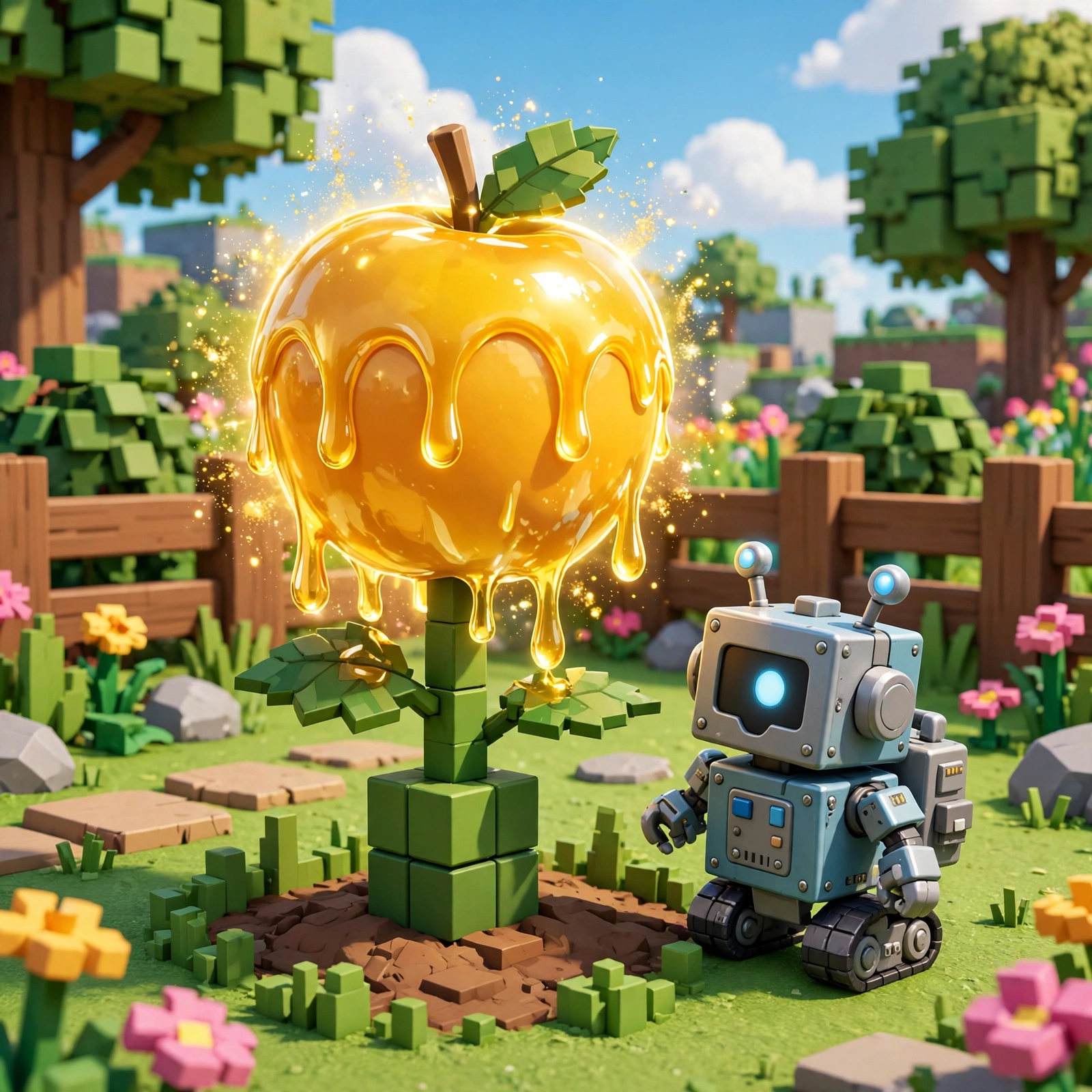
Some sources call the ability "Oil or Boil," which suggests the pet applies two mutations. The reports checked describe an Oil-only effect: the trigger applies Oil, and no Boil application is documented alongside it. The name is the confusing part, not the effect. If a seller claims a Junkbot applies Boil, ask for the source. Until one is shown, treat the Junkbot as Oil-only, and do not pay a Boil premium.
Getting Junkbot: Admin Event Only
The Junkbot was available through Albert admin abuse events and Junkbot Raid participation. Those were event routes, not shop routes, and they are over. The steps, for the record, were: join the event window, take part in the raid, and receive the pet through the event system. There is no egg to hatch, no shop listing to wait for, and no quest chain to complete now. Any guide that lists a current hatch route for the Junkbot is out of date.

Why Trading Is the Only Route
New players cannot earn a Junkbot now because the events that gave it out have ended, and no permanent route replaced them. Trading is the only route left. That single fact drives the Junkbot's whole market: every Junkbot in circulation came from an old event, so supply only shrinks as accounts go quiet, while demand from Oil-hungry farmers stays steady.
Oil Without Junkbot: Rain, Other Routes
You do not need a Junkbot to get Oil. Oil Rain is the main alternative: a weather-style event that applies Oil across the garden without any pet. Other routes include trading for already-Oiled fruit and using other Oil sources where the current patch provides them. Compare the routes honestly. A Junkbot is passive and permanent once owned, but it costs a trade. Oil Rain is free but unpredictable. For a player who needs Oil once, waiting for rain beats buying a pet. For a player who farms Oil every day, the pet pays for itself in convenience.
| Oil route | How it works | Cost and catch |
|---|---|---|
| Junkbot | Passive Oil chance about every 14 to 15 minutes | Trade-only pet, thin market |
| Oil Rain | Event applies Oil across the garden | Free, but unpredictable timing |
| Traded Oiled fruit | Buy fruit that already carries Oil | One-off value, no repeat supply |
Multiple Junkbots: Placement, Coverage
Multiple Junkbots can run in the same garden, and each one rolls its own chance on its own cycle. Coverage is the question: two Junkbots parked together cover the same fruit twice, which wastes one pet's range, while two Junkbots parked apart cover two patches. Spread them across your best crops, not in a cluster. There is no confirmed stacking bonus beyond independent rolls, so do not pay for a second Junkbot on the promise of a multiplied chance. The second pet adds coverage, not a multiplier.
Junkbot Weight by Age
Junkbot weight follows the standard pet formula, and like most event pets, its confirmed hatch weight was not found in the sources checked. The table below is therefore given in multiples of hatch weight. Read your own Junkbot's hatch weight in game and multiply.
Junkbot Weight Formula
At age 1, weight equals hatch weight. At age 10, it is roughly 1.8 times hatch weight. At age 50, about 5.5 times. At age 100, ten times. Those multiples are exact consequences of the formula, not guesses, but they are only useful once you know the starting weight.
Junkbot Weight Classes
Normal is under 5 kg, Huge is 5 to under 7 kg, Titanic is 8 to under 9 kg, and Godly is 9 kg and up. Junkbot trades are usually about the ability, not the weight class, but a Huge or better Junkbot still commands more, because weight class is visible status in every trade.
Junkbot Value: Cheap vs Trillion Claims
Junkbot prices are the messiest numbers in this guide. Cheap listings exist, and so do trillion-plus claims, and both cannot describe the same market. The honest reading is that the market is thin: few Junkbots trade, so one cheap sale and one wild asking price can both be real listings without either being the market price. Treat any single listing as one data point. Check several listings, check how long they have sat unsold, and never accept a trillion-plus figure as a value without a completed sale behind it. For a thin-market pet, the completed trade is the only price that counts.
Junkbot Mistakes: Hatching, Boil Hopes
Two mistakes dominate Junkbot trading. The first is expecting to hatch one: there is no egg, and no amount of hatching will produce a Junkbot. The second is expecting Boil: the documented effect is Oil only, and a Boil promise is a reason to walk away from a trade, not to pay more. A third, smaller mistake is parking one Junkbot in a corner and wondering why Oil never lands. Placement near valuable fruit is the strategy, and the pet cannot fix a bad spot.
Junkbot Patch and Freshness Check
Event pets change status with patches: a new event can return an old pet, and a balance patch can change a rate. Before trading, check the current patch notes for any Junkbot return or Oil change, and compare the 14 percent and 14 to 15 minute figures with the current guides. The figures here are community-reported, not in-game verified.
Conclusion
The Junkbot is a slow, passive Oil source that can no longer be earned, only traded. Its documented effect is Oil only, its market is thin enough that wild price claims should never be trusted on their own, and its best alternative is free: wait for Oil Rain. Buy one only if you farm Oil daily and the completed-trade price makes sense.
—
Frequently Asked Questions
Its Oil or Boil passive gives nearby fruit about a 14% chance to receive the Oil mutation, per the opened ssegold.com FAQ.
Not through regular gameplay, per the opened ssegold.com FAQ; search guides say trading with other players is a possible route, but that route is not confirmed on the opened page.
You do not need a Junkbot to get Oil. Oil Rain is the main alternative: a weather-style event that applies Oil across the garden without any pet.
Some sources call the ability "Oil or Boil," which suggests the pet applies two mutations. The reports checked describe an Oil-only effect: the trigger applies Oil, and no Boil application is documented alongside it.
Junkbot prices are the messiest numbers in this guide. Cheap listings exist, and so do trillion-plus claims, and both cannot describe the same market.